The volatility of the energy market does not merely impact airline finances; it quietly redefines our routes, the viability of tourism, and the way the European continent remains bound to the geopolitics of oil.
By Ehab Soltan
HoyLunes — There are costs that are stated with complete transparency on a purchase receipt, while others operate from the shadows, quietly altering every one of our daily decisions before we even realize it. For a long time, the kerosene that powers commercial aviation jets belonged to the former group: it constituted a crucial accounting line item for the financial management of any airline, but it rarely crossed a traveler’s mind when booking a seat. However, when the price of aviation fuel suffers a deep enough shock, it ceases to be a mere corporate office concern and ripples through the global economic fabric, ultimately impacting, one way or another, the passenger’s pocket.
The third-quarter balance sheets presented by the four giants of U.S. air transport draw a scenario impossible to ignore. United Airlines, American Airlines, Delta Air Lines, and Southwest Airlines recorded a combined fuel expenditure of $15.981 billion, a staggering figure when compared to the $9.665 billion recorded in the same period of the previous year. This increase of $6.316 billion represents a 65.4% jump which, while responding to a combination of crude oil price fluctuations, operational consumption intensity variations, and accounting adjustments, reveals by itself the immense financial pressure borne by an industry historically accustomed to operating on extremely narrow profit margins.
However, the true analytical perspective unfolds precisely by looking beyond the cold statistics.
The Invisible Bill: How the Traveler Absorbs the Cost Without Seeing It in the Fare
Faced with the disproportionate rise in operational costs, the most logical response from an airline would seem to consist of passing that difference directly onto the final ticket price. Nevertheless, commercial aviation responds to a dynamic far too complex to admit such linear solutions. Applying an excessive price hike risks severely cooling demand; cutting flight offers can erode overall revenue; sustaining loss-making routes eats away at profitability; and removing capacity from specific markets can disrupt the connectivity of entire regions.
Due to this delicate balance, the impact of expensive fuel never adopts a single path.
Its effects may crystallize in a more expensive ticket, but also in a drastic reduction of weekly frequencies, the permanent cancellation of a route, the obligation to accept additional layovers, or a widening gap between the base fare and the total amount after adding ancillary services. Similarly, it usually translates into a more aggressive commercial strategy in selling extras—turning amenities that were previously taken for granted into paid features—or in an unyielding scrutiny to retain only those routes with guaranteed profitability.
Thus, the air transport user ends up footing the fuel bill even in scenarios where the increase is not explicitly displayed on the purchase screen.
The International Air Transport Association (IATA) itself estimates that fuel will account for 31.4% of airlines’ total operating costs in 2026, significantly higher than the 25.4% registered the previous year. In parallel, although the organization expects global sector revenue to continue growing, it forecasts that overall net industry profits will fall to nearly $23 billion, equivalent to a slim net margin of just 2%.
We are facing a major paradox: airlines can post record revenues while simultaneously finding themselves cornered by a maximum financial squeeze.
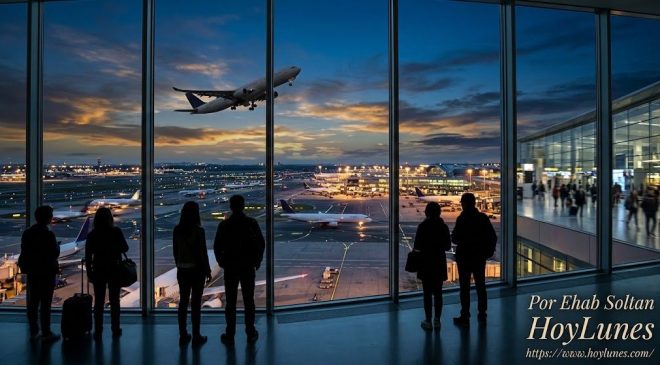
The global network exposed: the entire scene unfolding on screen
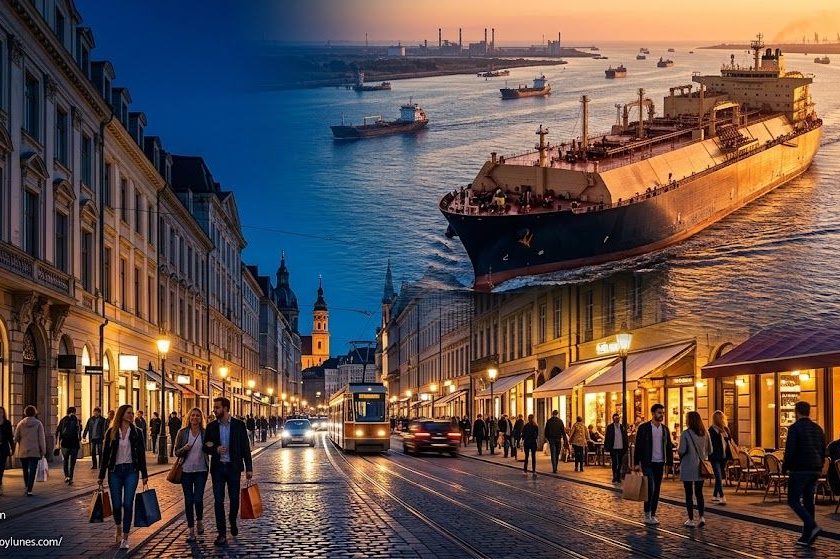
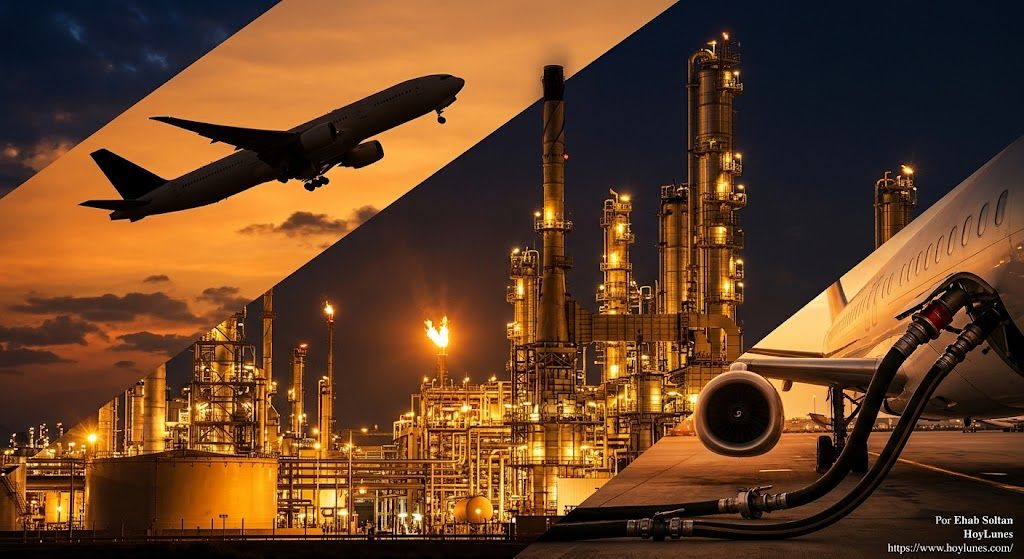
This situation forces us toview air transport from a much broader and more comprehensive perspective. A passenger aircraft is not simply a technological vehicle that burns kerosene to connect two cities. In reality, it constitutes the final visible piece of an intricate and vast logistical chain involving refineries, port terminals, pipelines, strategic maritime routes, airport infrastructures, aircraft manufacturers, energy corporations, financial markets, and global political decisions capable of triggering shockwaves thousands of miles away.
The energy tension unleashed in 2026 has exposed the extreme fragility of this global interdependence.
According to data analyzed by IATA, under stable conditions, the Strait of Hormuz funneled nearly 470,000 barrels per day of aviation fuel, representing approximately 23% of global jet fuel exports. Of that vital flow originating from the Persian Gulf, Europe absorbed nearly 80%, a volume that satisfied around 40% of all its continental imports of said fuel. Added to this tight equation, the market price of aviation fuel nearly doubled since late February.
Overnight, a narrow maritime passage that might have seemed like a distant geography in the eyes of European citizens acquires a decisive weight in their daily lives.
The problem transcends the mere price quotation of energy.
It is directly connected to the physical possibility of keeping airplanes in the air.
And on the flip side of that operational possibility lie international tourism, business travel dynamics, family reunions, air cargo transport, global supply chains, and the economic dynamism of countless cities whose development depends entirely on their connections to the outside world.
Shared Vulnerability: The Strategic Network Between Europe and the Gulf
Over the past few decades, European perception has tended to pigeonhole the Persian Gulf as a simple provider of energy resources—a simplistic view that is wholly insufficient to gauge its current role.
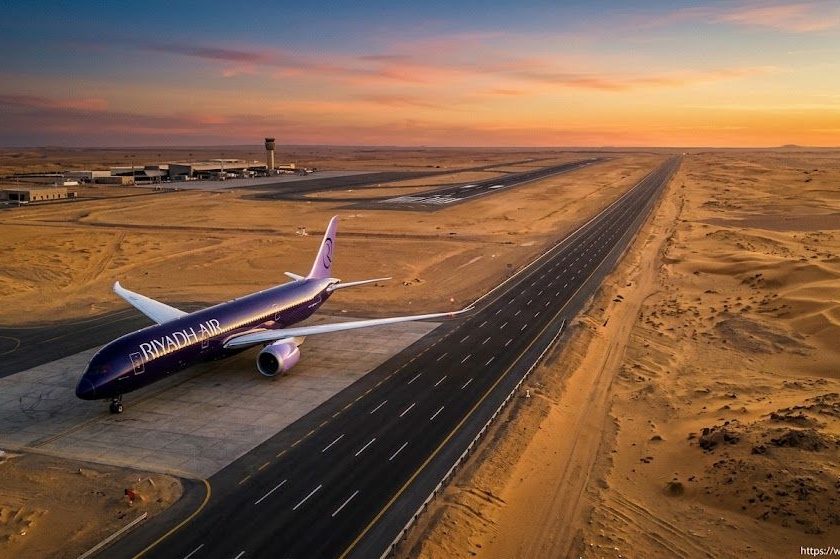
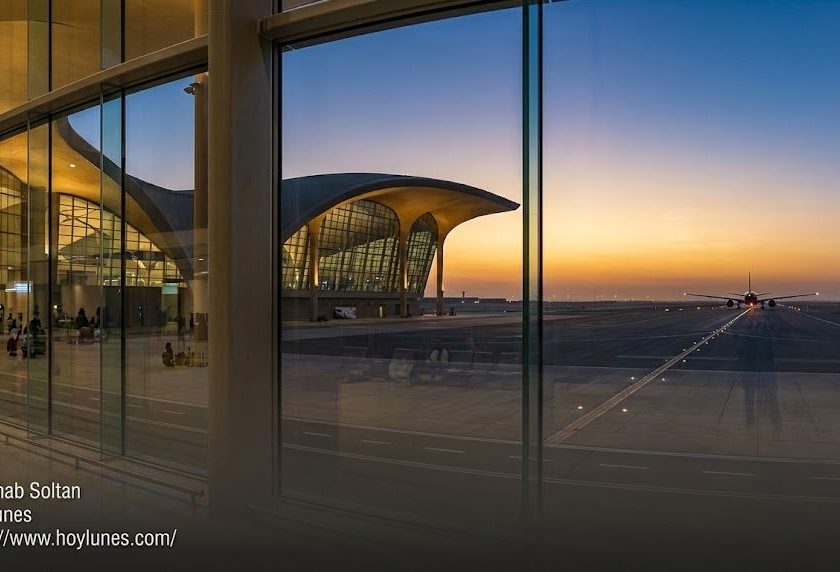
Nations such as Qatar, Saudi Arabia, and the United Arab Emirates have structured an international architecture in which energy, air transport, major investments, logistics, and global connectivity operate indissolubly. Their international airports and flag carriers have been fundamental pieces in building some of the most important connecting arteries between Europe, Asia, Africa, and emerging markets.
The central paradox of the present crisis lies in the fact that the Gulf economies themselves suffer from the destabilization of the energy and aeronautical system that they help sustain. According to IATA projections, Gulf countries rank among the economies most exposed to the direct impact of this energy shock, while severe restrictions imposed on regional airspace have hit their airlines head-on, forcing them to massively reorganize itineraries and alter operations.
This scenario introduces a crucial perspective that is often overlooked when the debate is confined to the price of oil per barrel: dependence in transport and energy matters is not a one-way vector.
While Europe requires a steady flow of energy and fuel from the Gulf, the Gulf region equally requires the full operational status of international networks that channel the continuous transit of people, capital, goods, and knowledge. The vulnerability or stability of one part of the mechanism immediately compromises the other.
The passenger sees the price when buying the ticket. The real bill for the journey, however, begins to be settled long before stepping foot in the airport.
Behind-the-Scenes Adjustments: The Pursuit of Efficiency Amid Skyrocketing Costs
The responsiveness demonstrated by Gulf carriers in this environment adds a nuance of immense interest to strategic analysis.
Last September, Qatar Airways Chief Executive Officer, Hamad Al-Khater, revealed that the airline had not passed the full cost of higher fuel prices onto customers, opting instead to create a specialized technical committee dedicated exclusively to process optimization and energy efficiency. According to his figures, the cost of jet fuel had surged by nearly 90% since the onset of the crisis.
This stance is highly illustrative, as it proves that a turbulence of this magnitude cannot be resolved by the easy recourse of raising ticket prices. Airlines are forced to deploy complex strategies: absorbing part of the financial blow, maximizing operational efficiency, reevaluating route profitability, protecting key markets, or diversifying income streams.
Each aviation group designs its own roadmap to weather the storm.
However, all companies stumble upon the same undeniable truth: before a flight can become a travel itinerary, it needs to consume energy.
And that energy responds to a very specific geography and set of geopolitical conditions.
The Redesign of the Air Map: Profitability Over Volume
For years, the expansion of globalization projected the false impression that travel was a matter governed almost exclusively by commercial supply and demand dynamics. If interest in a destination was detected, an airline launched a route; if passenger volume grew, the airport expanded its facilities; if a city aspired to attract visitors, it merely had to subsidize or promote its air connectivity.
The energy shock of 2026 reintroduces a structural variable into the equation that had remained hidden.
The key question is no longer reduced to knowing how many travelers wish to move between two points on the planet, but to determining how much it costs to physically maintain that air link and what profit margin remains after covering the energy bill.
This paradigm shift promises to reconfigure the route map silently yet profoundly.
Major intercontinental arteries will remain strategic, but airlines will have increasing incentives to concentrate their resources solely on those routes capable of guaranteeing high yields. Some cities will preserve their connectivity thanks to their immense corporate or tourism appeal, while other secondary destinations will have to compete fiercely to avoid losing their direct flights. On this new board, regional airports will gain appeal if they allow for the optimization of a global network scheme, ground connections by road or rail will solidify as the natural extension of the airplane, and certain geographical areas will have to demonstrate with solid numbers that the demand they generate justifies the high cost of flying to them.
Commercial aviation of the future is thus taking shape not as a race to grow at any cost, but as an exercise in strategic precision focused on determining where, when, and how it remains viable to keep a city connected to the rest of the world.
Connectivity as an Essential Pillar of the Tourism Experience
For the average citizen, the most evident reflex of this crisis will manifest in the cost of travel, although the ramifications go much further.
International tourism relies on a highly sensitive balance between available time, economic capacity, and physical accessibility. A moderate increase in airfares may not alter the plans of a high-income traveler, but it can be decisive in causing a family to change destinations, shorten their stay, move their vacation to the off-season, or opt for a summer spot closer to home.
This is how the energy bill ends up dictating something seemingly far removed from geopolitics, such as our choice of vacation.
A hotel complex can renovate its facilities, a city can deploy a top-tier cultural offering, and local dining can achieve gastronomic excellence. However, if the logistics to reach that destination become cost-prohibitive or excessively complex, all that accumulated effort drastically loses its pulling power against other competitors.
Air connectivity is, consequently, not a mere secondary service or an invisible infrastructure foreign to the journey.
It is a fundamental and inseparable component of the tourism product itself.
Economic Security and the Gap in Energy Transition
There is another uncomfortable reality that the present situation prevents us from continuing to ignore.
Although the aviation sector has spent years championing commitments to operational efficiency, fleet modernization, and the incorporation of sustainable fuels, the magnitude of this energy crisis highlights the gulf that still separates corporate goals from market reality. Projections by IATA indicate that global Sustainable Aviation Fuel (SAF) production will barely reach a symbolic 0.8% of global fuel demand in 2026, a figure frankly far removed from the massive volumes the industry would need to meet its long-term decarbonization goals.
For this reason, the debate on energy transition must leave the purely environmental sphere behind and also be addressed as a priority matter of economic security.
A global transport system that maintains an absolute reliance on an energy source exposed to recurrent geopolitical crises will remain intrinsically vulnerable, regardless of how efficient its aircraft turbines may be.
Technological efficiency allows for a reduction in consumption volume.
However, in no case does it eliminate resource dependency.
The True Dimension of the Airline Ticket
Analyzing the financial statements of United, American, Delta, and Southwest allows us to gauge the impact of the problem from the perspective of the North American market. The operational difficulties facing Gulf operators reflect it from the standpoint of the major global transit hub. Europe, for its part, will face a position of extreme fragility by combining a very high demand for international mobility with a deep dependence on fuel imports.
All these factors converge into the same shared story.
Fuel pricing dictates the financial health of the airline; the company readjusts its cost structure; that accounting pressure ends up impacting fares and services; the new fares alter traveler behavior; those habits modify route viability; route revisions reconfigure territorial connectivity; and variations in connectivity end up transforming tourism, commerce, and the wealth of entire regions.
An event that begins as a disruption in global energy markets can end up determining a choice as daily as where we will fly on our next vacation.
Therefore, analyzing rising kerosene prices is not merely talking about airplanes and airlines.
It is analyzing the economic architecture that enables millions of people and goods to keep circulating around the planet every day.
For decades, we naturally assumed that traveling simply consisted of purchasing a ticket online and going to the departure terminal. The current energy crisis comes to remind us that behind that everyday gesture lies an invisible, massive, and complex infrastructure: a web of energy production, refineries, maritime routes, airport facilities, large corporations, commodity markets, geopolitical agreements, and distant territories that make it possible for an aircraft to rise into the air.
The passenger discovers the cost of the flight when paying for their ticket. The real bill for the journey, however, begins to be settled long before stepping foot in the airport.